Every treatment, explained before you sit down.
Seven kinds of care, each written up the way we’d explain it in the chair: what it is, how long it takes, how many visits, and the starting price.
Book a visitCheck-ups, cleaning and fillings
Half an hour in the chair, and you leave knowing what’s going on in your mouth.
- Usually takes
- Check-up 30 minutes. Scale and polish 30 to 45 minutes. A filling 30 to 45 minutes a tooth.
- Visits
- Usually one. Deep cleaning for gum disease is done over two visits.
- From
- Check-up from ₹700, scale and polish from ₹1,800, fillings from ₹1,800 a tooth. See the full price list
What it is
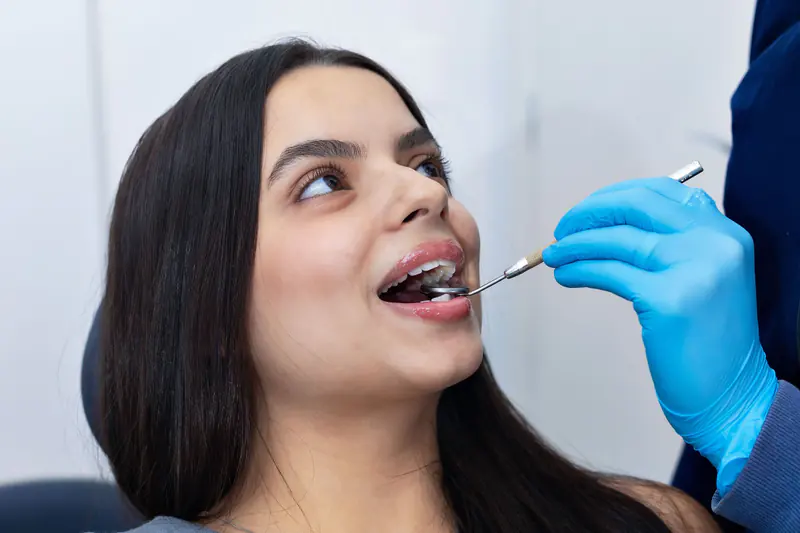
A full check of your teeth and gums, a scale and polish to remove the hard deposits a toothbrush can’t, and tooth-coloured fillings for any cavities we find.
Who it’s for
Anyone who hasn’t seen a dentist in a year, and anyone with bleeding gums, sensitivity to cold, a dark spot on a tooth, or food that keeps catching in the same place.
What happens at the visit
We check every tooth and measure the gum around it, take digital x-rays only if we need them, and show you the photos from the intraoral camera on the screen. Cleaning uses an ultrasonic scaler, then a polish. For a filling, we numb the tooth (gel first, then the injection), remove the decay, and fill it in a shade matched to your tooth.
Afterwards
Gums can feel tender for a day after a deep clean. You can eat on a new filling once the numbness wears off, usually in one to two hours. We’ll send you a WhatsApp reminder when your next check-up is due.
Every six to twelve months for most adults. If your gums bleed easily, you smoke, or you have diabetes, we may suggest every four months, and we’ll tell you why.
Only if they’re cracked, leaking or have decay underneath, which the x-ray shows. A sound silver filling can stay. If you want them replaced for looks, we’ll give you the cost first and you can decide.
Whitening, veneers and smile design
Changes to colour and shape. For veneers and bonding, you see a mock-up on your own teeth in the mirror before anything is done.
- Usually takes
- Whitening 60 to 90 minutes. Composite veneers about 45 minutes a tooth. Porcelain veneers two weeks.
- Visits
- Whitening one. Composite veneers one. Porcelain veneers two or three.
- From
- Whitening from ₹9,000, smile design from ₹5,000 (adjusted against veneers), composite veneers from ₹6,000 a tooth, porcelain veneers from ₹15,000 a tooth. See the full price list
Cosmetic prices include GST where it applies.
What it is
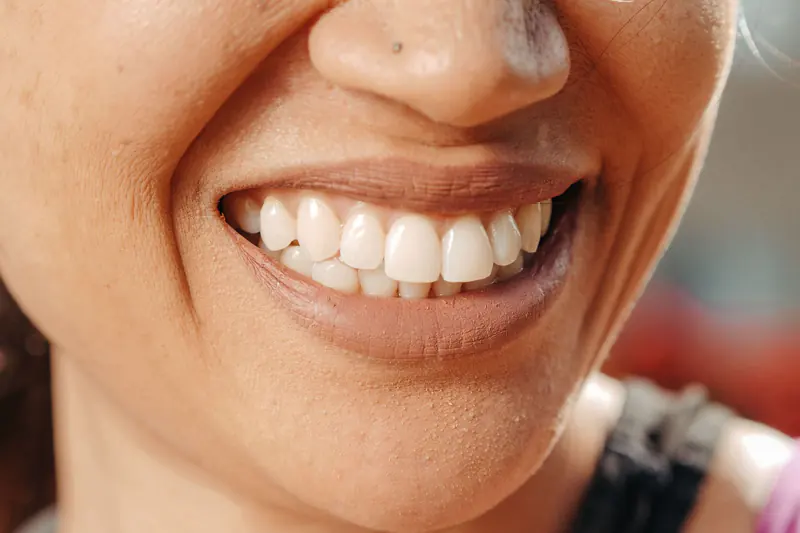
In-clinic whitening, composite and porcelain veneers, small reshaping with bonding, and smile design, where we plan changes to several front teeth together.
Who it’s for
Adults with healthy teeth and gums who want a change in colour or shape. If you have cavities or gum disease, we treat those first, because whitening and veneers don’t fix them.
What happens at the visit
The first visit is a consultation with photos and a shade check. For whitening, we protect your gums, apply the gel in three or four rounds of 15 minutes under a light, and check the shade at the end. For veneers or smile design, we build a trial smile (a mock-up) on your own teeth, so you can see it in a mirror and on camera before you decide.
Afterwards
Teeth can be sensitive for a day or two after whitening. For 48 hours, skip tea, coffee, red wine and dishes heavy on haldi. How long whitening lasts depends on what you eat, drink and smoke.
It depends on you. Tea, coffee, paan and smoking bring colour back sooner. We’ll tell you what to expect for your own teeth at the consultation, before you pay for anything.
Composite veneers usually need little or no drilling. Porcelain veneers need a thin layer of enamel removed, usually about half a millimetre, and that can’t be undone. That’s why you see the mock-up first, and we only go ahead once you’ve said yes to it.
Braces and clear aligners
Braces you can see, or aligners you mostly can’t. For teenagers and adults with healthy gums.

- Usually takes
- Braces 12 to 24 months. Aligners 6 to 18 months.
- Visits
- Braces: a review every four weeks, about 20 minutes. Aligners: a review every six to eight weeks.
- From
- Metal braces from ₹40,000, ceramic braces from ₹55,000, clear aligners from ₹85,000. EMI is available on all three. See the full price list
What it is
Metal braces, ceramic (tooth-coloured) braces, and clear aligners, which are a series of thin plastic trays you change every one to two weeks.
Who it’s for
Teenagers and adults. Many of Dr Lakdawala’s patients are in their thirties and forties. Children can have a first orthodontic check at about seven, so bite problems are spotted early.
What happens at the visit
The consultation takes 45 minutes: photos, a full-mouth x-ray (OPG) and a digital scan of your teeth, with no putty impressions. You get a written plan with each option, how long it should take and what it costs. Fitting braces takes about an hour.
Afterwards
Teeth ache for three to five days after braces go on and after each adjustment, so plan on soft food. When treatment ends, you wear a retainer at night to hold the teeth in place.
Usually not. Teeth can be moved at any age if the gums and bone around them are healthy, and the x-ray at your consultation checks exactly that.
Aligners are nearly invisible and come out when you eat, but they only work if you wear them 20 to 22 hours a day. Braces stay on, so there’s nothing to remember, and they handle some complex bites more predictably. Dr Lakdawala will tell you which suits your teeth, and why.
Implants, crowns and bridges
For a missing tooth, a broken one, or a back tooth after a root canal.
- Usually takes
- Implant: two stages over three to four months. Crown or bridge: about a week.
- Visits
- Implant three or four, including check-ups. Crown or bridge two.
- From
- Implant with crown from ₹40,000, crowns from ₹8,000, bridges from ₹8,000 a unit. See the full price list
What it is
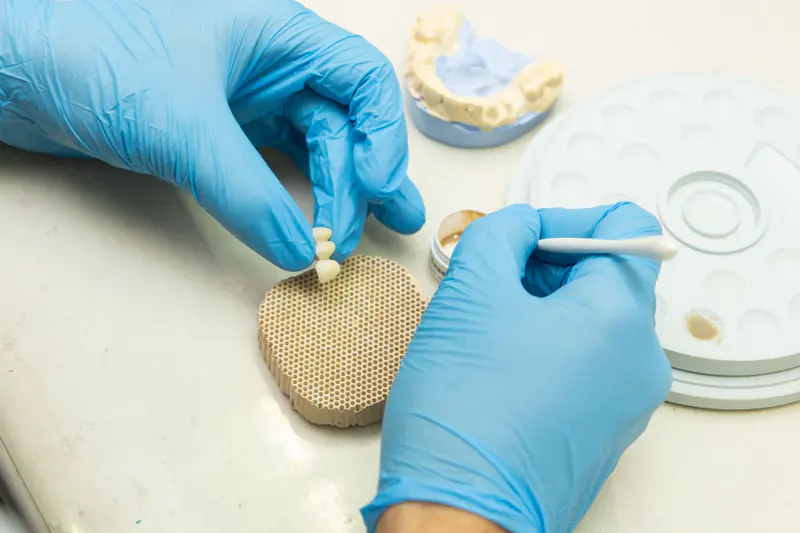
An implant is a titanium post placed in the jawbone, with a crown fitted on top once it has healed. A crown is a cap that covers and protects a damaged tooth. A bridge fills a gap by holding a false tooth between crowns on the teeth either side. We also make complete dentures.
Who it’s for
Anyone missing one or more teeth, with a cracked or heavily filled tooth, or with a back tooth that has had a root canal.
What happens at the visit
We plan an implant on a full-mouth x-ray and, where needed, a 3D CBCT scan at an imaging centre nearby. Placing the implant takes about an hour under local anaesthetic. For a crown or bridge, we shape the tooth, take a digital scan, and fit a temporary crown while the lab makes yours. Your estimate names the implant brand and the crown material.
Afterwards
After an implant, expect swelling for two or three days and soft food for a week. Stitches come out after 7 to 10 days. A new crown can feel tall for a day or two. If it still does after that, come back and we’ll adjust it at no charge.
The area is numb, so you feel pressure while it’s placed, not sharp pain. Expect two or three sore days afterwards, much like after having a tooth out, and we prescribe painkillers for them.
An implant replaces one tooth without touching the teeth next to it, but it needs minor surgery and a few months. A bridge is done in two visits about a week apart, but the teeth either side are shaped to hold it. We’ll show you both on your x-ray, with costs, and you choose.
I took the 7 pm slot both times and was home for dinner.
Root canal treatment
Treats a tooth that’s infected or inflamed inside, so you can usually keep it. Often done in one sitting, where the tooth allows.

- Usually takes
- 60 to 90 minutes a visit.
- Visits
- One or two. A back tooth then needs a crown, which takes two more.
- From
- From ₹5,500 for a front tooth and ₹8,500 for a molar. The crown is priced separately. See the full price list
What it is
Cleaning the infected or inflamed nerve out of the tooth’s root canals, shaping them and sealing them, so the tooth can usually stay.
Who it’s for
A tooth that aches at night, hurts with hot drinks long after you’ve swallowed, has a small boil on the gum beside it, or has turned dark after a knock.
What happens at the visit
First an x-ray, then numbing gel and a local anaesthetic. A thin rubber sheet goes around the tooth to keep it dry and clean. The canals are cleaned with fine files, rinsed and filled. If the infection is mild and the canals are straightforward, we finish in one sitting. If there’s an abscess or the canals are curved, we place a dressing and finish about a week later.
Afterwards
The tooth can be tender to bite on for two or three days. Until the crown is on, chew on the other side.
Often, yes. If the infection is mild and the canals are easy to reach, Dr Rodricks finishes in one visit of 60 to 90 minutes. A tooth with an abscess, or with curved canals, usually needs two visits about a week apart. We’ll tell you which after the x-ray, before we start.
For back teeth, usually yes. A root-treated molar is more likely to crack under chewing, and a crown protects it. Front teeth often need only a filling. Crowns start from ₹8,000.
Kids’ dentistry
Short, unhurried visits with Dr Bhide, our paediatric dentist, on Tuesday and Thursday afternoons and all day Saturday.
- Usually takes
- First visit and check-ups 20 to 30 minutes. Sealants 10 to 15 minutes a tooth.
- Visits
- Usually one, then a check-up every six months.
- From
- Check-up from ₹700, fluoride from ₹800, sealants from ₹1,000 a tooth. See the full price list
What it is
First visits, check-ups, fluoride, sealants, root canals and crowns on baby teeth, and habit counselling for thumb-sucking, tongue-thrusting and mouth-breathing.
Who it’s for
Children from their first tooth to about fourteen, and parents who want a second opinion on a child’s teeth.
What happens at the visit
A first visit starts in the kids’ corner with a picture book. Then your child gets a ride up and down in the chair, and Dr Bhide counts their teeth if they’re ready. You stay in the room the whole time. Sealants are painted onto the chewing surfaces of the back teeth, with no injection and no drilling.
Afterwards
No food or drink for 30 minutes after fluoride. Children can eat normally straight after sealants. Every child picks a sticker on the way out.
By their first birthday, or within six months of the first tooth coming through. Early visits are short and mostly about getting used to the chair, and to us.
Not before about four. If it carries on once the adult front teeth start coming through, around six, it can push them forward. Dr Bhide starts with a chat and a reward chart, and suggests an appliance only if that doesn’t work.
Something hurts?
Come in today.
Call before 6 pm on a weekday, or before 3 pm on a Saturday, and we’ll see you the same day.
Dental emergencies
If something hurts, call before 6 pm on a weekday and we’ll see you the same day.

- Usually takes
- 30 to 45 minutes, to ease the pain and find the cause.
- Visits
- One to get you comfortable. We then plan the rest of the treatment with you.
- From
- Emergency visit from ₹1,000, including the x-ray and first-aid treatment. It’s adjusted against any treatment that follows. See the full price list
What counts
- Toothache that keeps you awake or doesn’t ease with painkillers
- Swelling in your gum, cheek or jaw
- A tooth knocked out, loosened or broken in an accident
- A lost filling or crown, with pain
- Bleeding that won’t stop after an extraction
- A broken brace wire cutting your cheek
Can usually wait a few days (still call us)
- A crown that came off without pain
- A small chip
- Mild sensitivity
Go to hospital instead
Go straight to a hospital emergency department, such as Lilavati Hospital on Bandra Reclamation, if you have swelling spreading towards your eye or down your neck, trouble breathing or swallowing, or an injury to your jaw.
What to do first
- Knocked-out adult tooth: hold it by the white crown, never the root. If it’s dirty, rinse it under cold running water for a few seconds. Push it back into the socket if you can, or keep it in a cup of milk, and come in straight away. For a child’s milk tooth, don’t push it back: bring the tooth and your child to us.
- Toothache: rinse with warm salt water and take the painkiller you normally take. Don’t hold a tablet against the gum: it burns.
- Swelling: hold a cold pack on the outside of your cheek, 10 minutes on and 10 minutes off. No heat.
- Broken tooth: keep the pieces, rinse your mouth with warm water, and use a cold pack if it’s swollen.
- Bleeding after an extraction: bite firmly on a folded clean gauze or handkerchief for 30 minutes without checking it.
How fast we’ll see you
Call or WhatsApp. We keep four slots free every weekday and two on Saturdays for emergencies. Reach us before 6 pm on a weekday, or before 3 pm on a Saturday, and we’ll see you that day. On Sundays we’re open 10 am to 1 pm for emergencies only. Messages sent after hours are read when the desk opens, and emergencies are answered first.
Afterwards
If we’ve put in a temporary filling or a dressing, chew on the other side until your next visit. You leave with a written plan for the rest.
Send a WhatsApp with your name and, if you can, a photo. It’s read when the desk opens, and emergency messages are answered first. For swelling near your eye or neck, trouble breathing or swallowing, or a jaw injury, don’t wait for us: go to a hospital emergency department.
No. Emergency slots are open to anyone. Bring any x-rays you have and a list of the medicines you take.
Not sure which of these you need? Start with a check-up.
Thirty minutes, ₹700, and it comes off your bill if you start treatment within 30 days.
| Monday to Friday | 10 am to 9 pm |
|---|---|
| Saturday | 9 am to 6 pm |
| Sunday | 10 am to 1 pm, emergencies only |